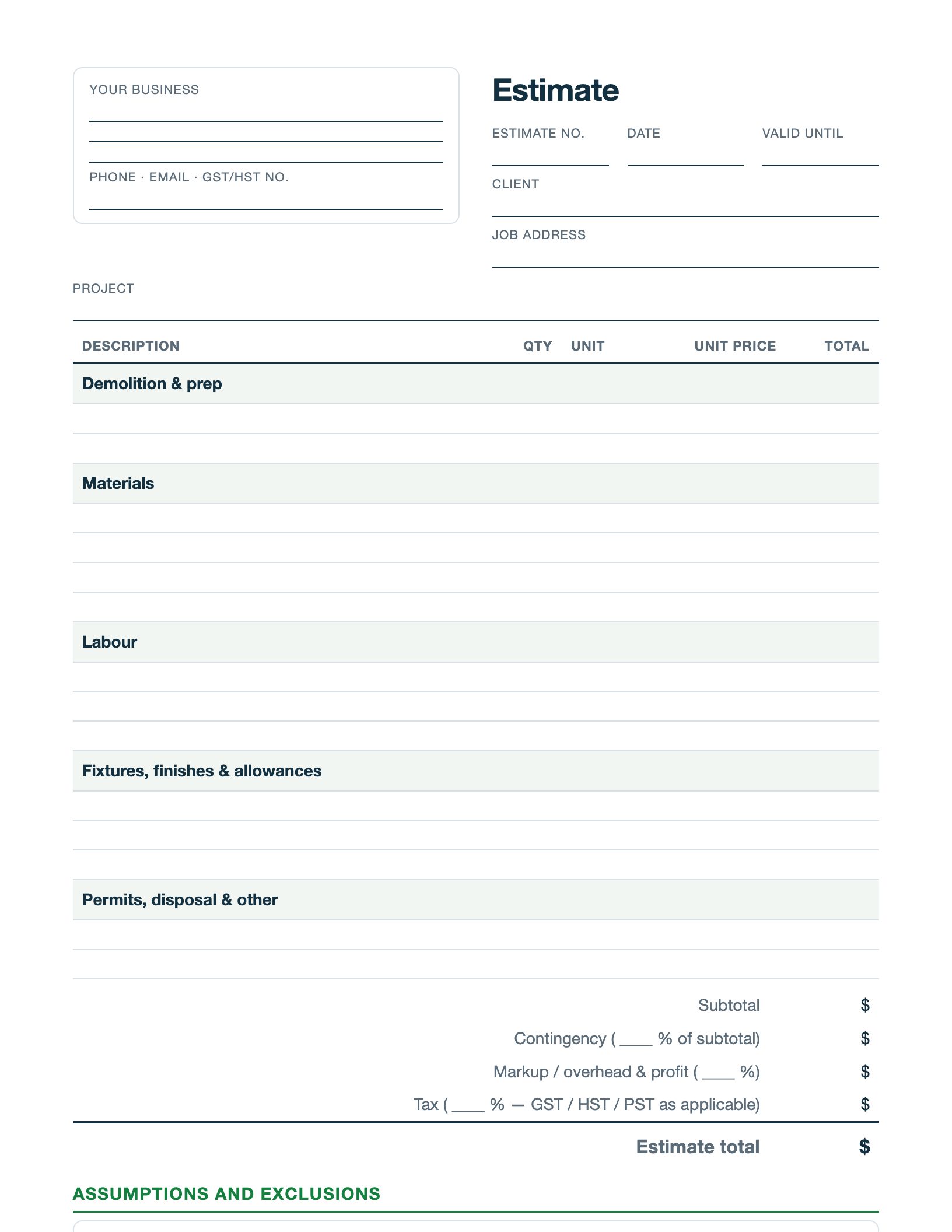
Sections for demolition, materials, labour, fixtures and permits; contingency, markup and tax worked out in the spreadsheet; assumptions, exclusions and a payment schedule so nothing is argued about later. Free Excel file, or a PDF to fill by hand.
Free for any contractor to use, edit and put their own name on. Not legal or tax advice — rules differ by province and state.
Your legal name, contact details and tax number at the top — the same block a compliant invoice needs later.
An expiry date protects you from material price moves. Thirty days is common.
Demolition and prep, materials, labour, fixtures and allowances, permits and disposal. Line items carry quantity, unit and unit price so the client can see how the number was built.
Contingency covers what you know you don't know; markup is overhead and profit. The spreadsheet applies them in that order, then tax on the lot. Why they are different things.
Access, existing conditions, who supplies what, and what is not included. The most valuable box on the page.
Deposit, draw, completion and holdback release, with a signature line. An accepted estimate becomes the scope of the contract.
An estimate is a promise about the future built from things you can measure today. The template separates the measurable part (quantities and unit prices) from the judgement part (contingency and markup), so when a job comes in over, you can see which one was wrong.
Fill quantities and unit prices in the yellow cells and the totals calculate. Change the contingency, markup and tax rates in the cells beside them. Keep the assumptions box honest: an estimate that says what it excludes is the one that gets paid without argument.
In Estiquik, seven renovation templates arrive already priced for your province — kitchen, bathroom, basement and more — and the estimate becomes the invoice, the contract and the change orders. The Free plan builds three estimates from a blank sheet; this spreadsheet is free for anyone.
In everyday use, an estimate is a considered approximation and a quote is a fixed price. Whatever you call the document, say on it whether the price is fixed, and for how long it is valid. This template has a valid-until date and an acceptance signature.
Overhead and profit combined commonly land between 15% and 35% of cost, depending on the size of the business and the job. The template defaults to 15% markup and 10% contingency; change both to your own numbers. Contingency vs markup, explained.
Showing sections and totals builds trust; showing your unit prices invites line-by-line haggling. The spreadsheet lets you print either way — hide the unit-price column before you export the PDF if you would rather show section totals.
It depends on the province and the tax. HST applies to the whole job in HST provinces; PST rules differ. The template applies one rate to the total; adjust the rate, or split labour and materials, as your accountant advises. This is not tax advice.
Estiquik's seven templates come with researched starting prices scaled to your province or state, on the Starter plan and up. This spreadsheet is blank and free.
Estiquik builds the estimate, turns it into the invoice, the contract and the change orders, and fills in your province's tax. Free plan, no card.